 Eric Carr
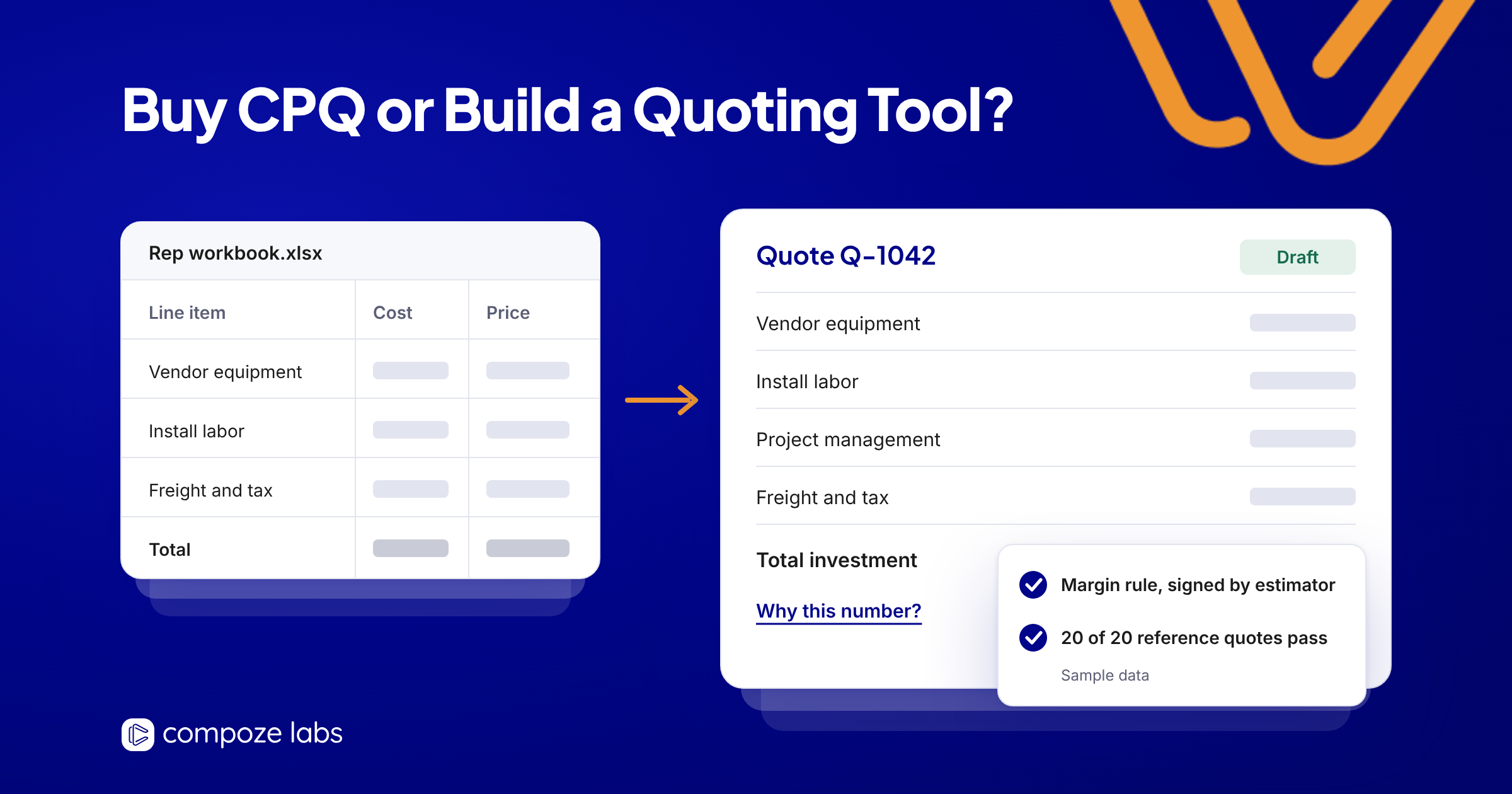
The short answer
Buy CPQ software when your quotes are mostly configured products with standardized, transactional volume and someone can keep the configurator's rules current.
Build your own quoting tool when pricing lives in estimators' spreadsheets or in a tool your reps already made.
Either way, write every pricing rule down first and have your estimator sign it against past quotes.
One PE-backed manufacturer told us some of its quotes take about two weeks to go out. In most of the quoting conversations we have, the slow part sounds the same. Someone is waiting on an outside vendor, someone is pulling numbers from several different places, and then the quote waits on a pricing desk for approval.
A material handling integrator with several branches took a different route. A small team there built its own quoting tool, reps started using it, and it priced projects the way the company prices them. Then we read the code line by line and found 11 things to fix before every rep and branch could depend on it. Compoze is now taking that tool to production, and what we found inside it is a pretty good guide to the buy-or-build decision.
Should a Manufacturer Buy CPQ Software or Build a Quoting Tool?
It comes down to where your pricing logic lives and who will keep it current. The quoting setups we run into are mostly custom spreadsheets and workflows, because off-the-shelf tools haven't been flexible enough for the way manufacturers price. Unless your volume is standardized and transactional, buying a CPQ product usually doesn't make as much sense.
Buy CPQ software when
- Your quotes are mostly configured products with options and price lists
- Your volume is standardized and transactional
- A sales ops or product team keeps the pricing rules current
- Per-seat licenses that grow with every rep and branch fit your budget
Build or harden your own tool when
- Your quotes are mostly project scope, like equipment, install labor, freight and margin by division
- Each quote is built for the job
- Pricing lives in estimators' spreadsheets or a tool your reps built
- You can fund the engineering to build and maintain it
Staying on spreadsheets costs deals. In a survey of 200 manufacturing decision-makers, run by the research firm TrendCandy and sponsored by quoting software company Aleran, 88% said they had lost deals because of how their quotes get generated and approved.
Buying doesn't skip the data work either, because a configurator still needs clean pricing data on day one. The integrator's reps were already quoting in a homegrown tool that matched how the company sells, so making that tool sturdy was the faster path.
What Breaks When a Rep-Built Quoting Tool Goes to Every Rep?
In the tool we reviewed, the pricing logic held up fine. What broke was everything around it, once many reps, several branches and every customer document depended on a tool a small team built for speed. Our review turned up 11 findings. Here are six of them.
Saves overwrote each other
Two reps saved the same quote, and the second save overwrote the first rep's edits with no warning.
Two prices for one quote
Pricing ran in the browser and again on the server, so the screen could show a different number than the proposal.
Rules hidden in the code
Two pricing rules lived only in code. A line with no division dropped out of the margin, and a negative price turned into a credit.
Totals off by a cent
Some half cents rounded down where Excel rounds up (a known JavaScript rounding quirk), so 2.675 became 2.67 and totals missed reps' workbooks.
Tomorrow's date on tonight's proposal
A blank proposal date printed the server's date, so a proposal sent in the evening could carry tomorrow's date.
Duplicate proposal numbers
Quotes were saved as files, and two existing quotes had the same typed proposal number.
None of that means you throw the tool out. Its code already knew how the company prices, so it became the first draft of the pricing rules, and each finding became a milestone in the plan. Quoting tools hit the same wall as pilots that stall on the way to production when nobody plans for many users.
How Do You Get Pricing Rules Right Before You Automate Quoting?
Write the rules down, test them against quotes you have already sent, and let your estimator settle every disagreement. For the integrator, that means 20 past quotes. We price each one with the written rules and compare it with the rep's workbook. If a rule is wrong, it gets fixed and a test gets added. If it's right, the quote is signed as a reference quote, and from then on all 20 get rechecked every time anything changes.
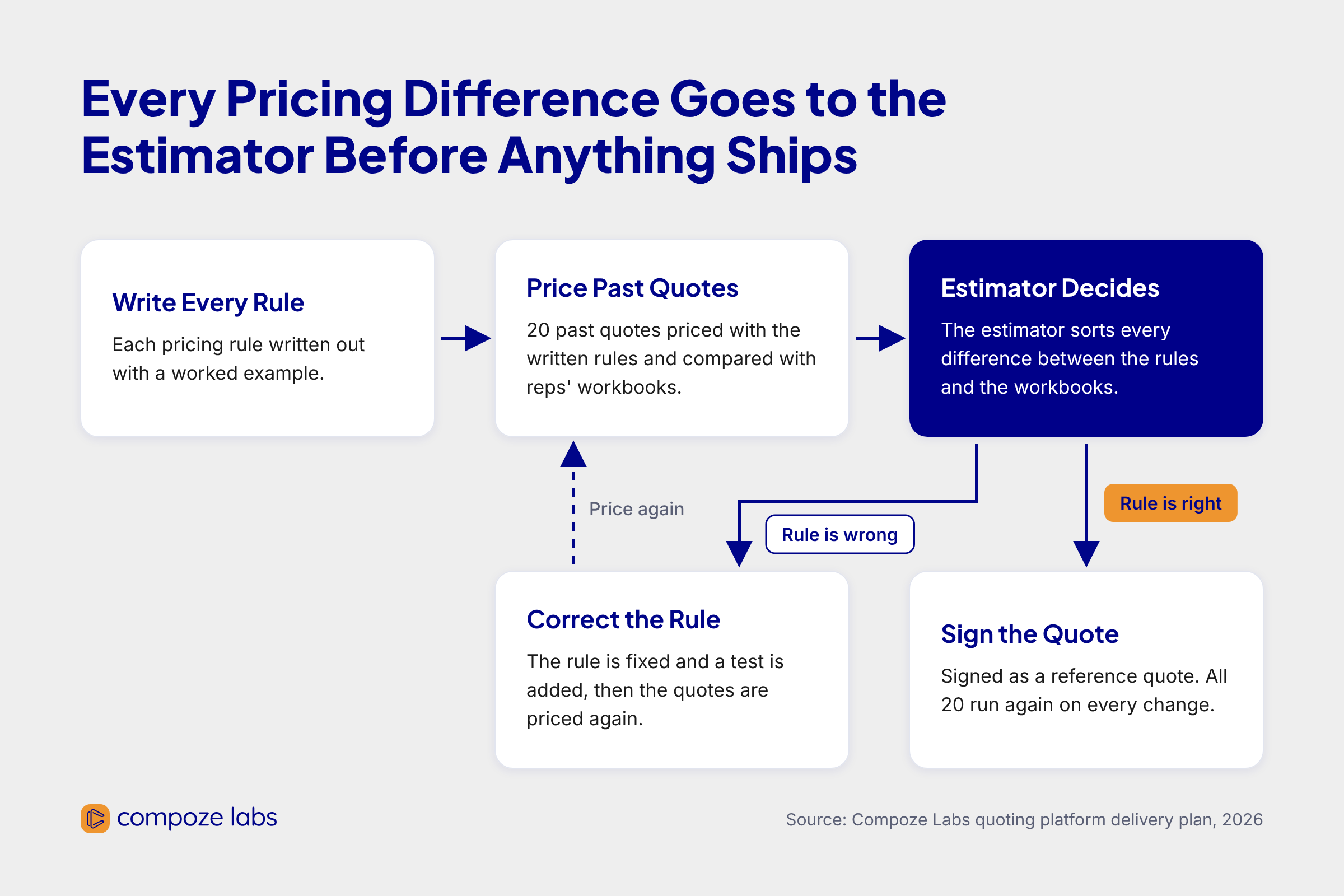
Each difference between the written rules and a rep's workbook goes to the estimator before anything ships.
A CPQ implementation needs this same work anyway, so doing it first tells you whether a configurator can even handle your pricing. On this project, pricing, quote lifecycle and customer documents made up 31 of the 47 open questions we logged. Most of the hard calls were about money and paperwork.
How Should You Roll Out a New Quoting Platform to Reps?
Add reps in stages, and make each stage prove the numbers before the next one starts. Reps trust prices they can check.
At the integrator, three to five champion reps go first. They run quotes through the new tool next to the old prototype, only to give feedback. Once the estimator signs all 20 reference quotes, those champions start quoting live. Then about 10 reps in one branch use it for four working weeks, with the old tool still there if they need it.
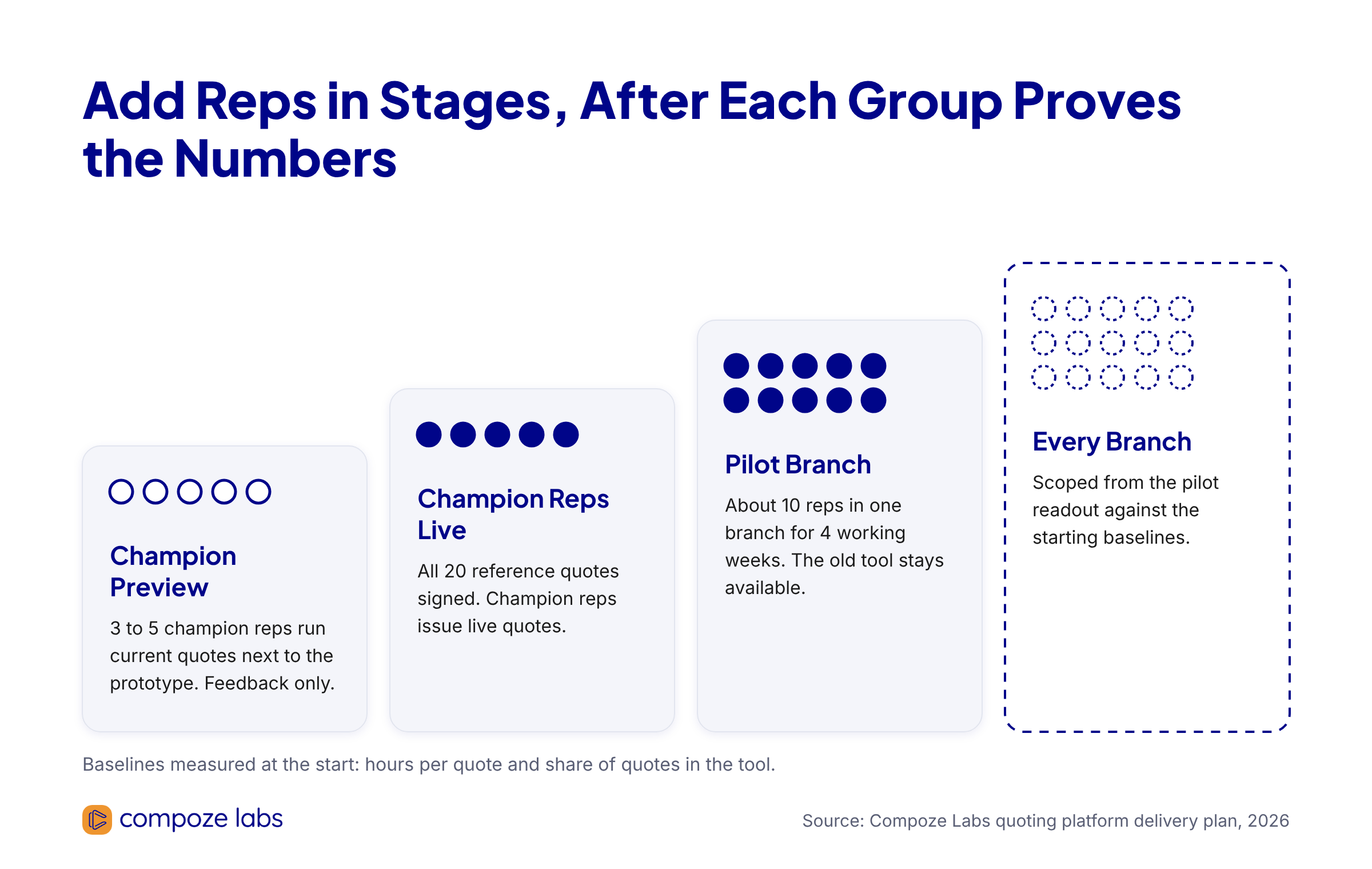
Each group of reps starts only after the group before it has proven the numbers.
The pilot tracks hours per quote and the share of quotes made in the tool, and those numbers shape the rollout to every branch. Won quotes leave the platform as a job-setup file for now. A deeper ERP connection comes later, the same piece-by-piece approach behind composable ERP.
Where Does AI Help in Manufacturing Quoting?
Reading the paperwork, with a rep checking the result. The price itself still comes from rules the estimator signed.
In the integrator's platform, Claude reads vendor quotes so reps stop re-keying vendor lines by hand, and a rep reviews each reading before it goes into the quote. Every price has a "Why this number?" view that shows where it came from. In the same Aleran-sponsored survey, six in 10 respondents said they were taking steps to put AI-driven pricing tools in place, and a view like that keeps those prices explainable to the reps who use them.
Spreadsheets and side tools carry costs that rarely show up in a budget. A signed set of pricing rules is the first step out, whatever you buy or build next.
Frequently Asked Questions
What is CPQ software?
CPQ stands for configure, price, quote. It is software that turns product options and pricing rules into a priced quote and a proposal. It works best when those rules are written down and someone owns keeping them current.
Should a mid-market manufacturer build or buy a quoting tool?
Buy when your quotes are mostly configured products with standardized, transactional volume and a team can maintain the rules. Build when quotes are mostly project scope or your reps already use a homegrown tool that matches how you sell. Write and sign your pricing rules first either way.
How long does it take to put a quoting platform into production?
For the material handling integrator in this post, the first phase runs about 12 working weeks from kickoff to a one-branch pilot, starting from a prototype its reps already used.
Who should sign off on pricing rules?
An estimator who knows how the business prices. In the project above, the estimator signs each written rule and each of the 20 reference quotes, and those quotes are checked on every change to the platform.
Can AI set prices in a quoting tool?
In the quoting platform described here, AI reads vendor quotes and a rep reviews each reading before it is used. The price comes from one calculation built on rules the estimator signed, with a "Why this number?" view on each price.